Wooden Broom Sticks: Quality Issues & Factory Solutions
Blog 2026-09-10
Intro
Hello, we are a factory with more than ten years of experience manufacturing and exporting wooden broom sticks. According to Straits Research, the global broom market reached $12.3 billion in 2025 and is projected to hit $17.21 billion by 2034.
As the global broom market continues expanding, demand for broom accessories, especially wooden broom sticks, rises accordingly. At the same time, wooden broom sticks quality issues become more prevalent. Common quality problems of wooden broom sticks include bending & warping, cracking, mould & mildew, thread stripping, and peeling PVC coating. These wooden broom sticks manufacturing quality problems may bring severe losses to importers and wholesalers of wooden broom sticks: full container rejection, customs detention, compensation claims to downstream supermarket clients, capital trapped in unsellable inventory, and costly round-trip ocean freight fees.
Wholesalers and importers of wooden broom sticks need to learn how to identify risks in advance and screen qualified wooden broom stick manufacturers, so you can lower the risk of failed bulk orders. By reading this article, you will master practical methods to tackle wooden broom sticks quality issues and find reliable wooden broom stick factory solutions.
Bending & warping – one frequent wooden broom sticks quality issues
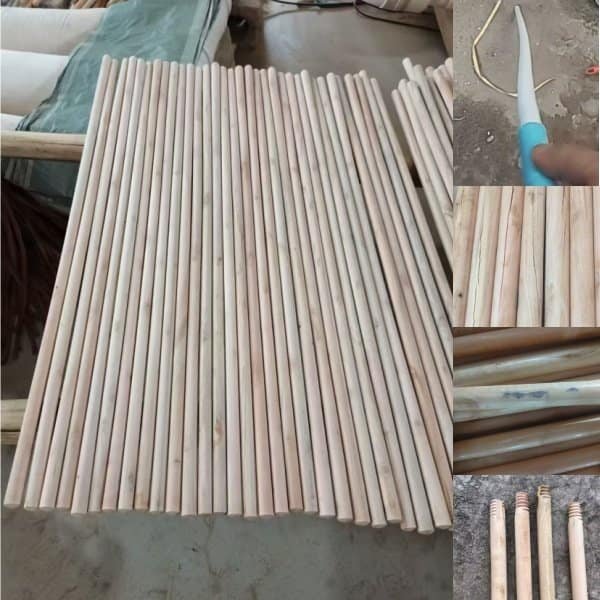
Bending and warping represent one of the most frequent wooden broom sticks quality issues. Three root causes lead to this defect: raw timber with inherent bends that are not sorted out during production, uncontrolled wood moisture content, and inadequate drying processes. Bending and warping make wooden broom sticks unfit for assembly, creating major procurement risks and full-container inventory losses caused by these quality problems of wooden broom sticks.
Some factories fail to enforce strict raw material sorting rules. Workers directly use bent timber to produce broom sticks without removing defective stock. In severe cases, bent finished sticks may account for one-third of an entire batch, a classic example of wooden broom sticks manufacturing quality problems.
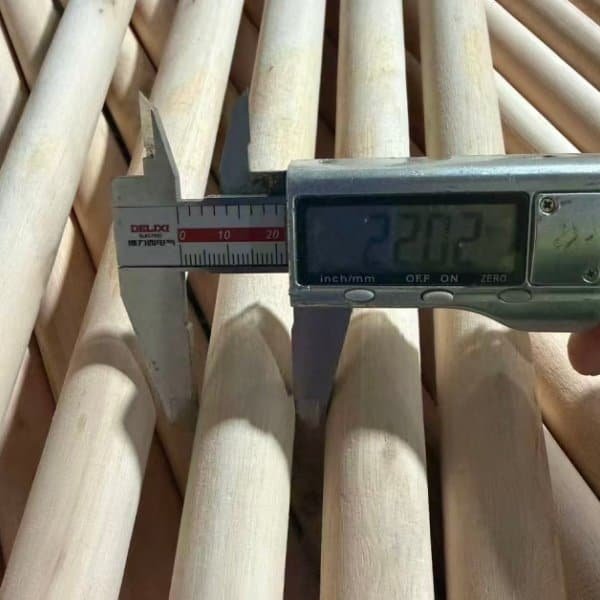
Eucalyptus wood, our primary raw material, requires a moisture content range of 12–18% for safe ocean export shipments. According to Purdue University Extension FNR-37《Drying Small Quantities of Hardwood Lumber》, the fiber saturation point (FSP) marks the critical moisture threshold where wood begins shrinking, warping or bending. Both excessively low and overly high moisture levels trigger wooden broom sticks quality issues: too dry and wood bends or cracks; too wet and mould grows.
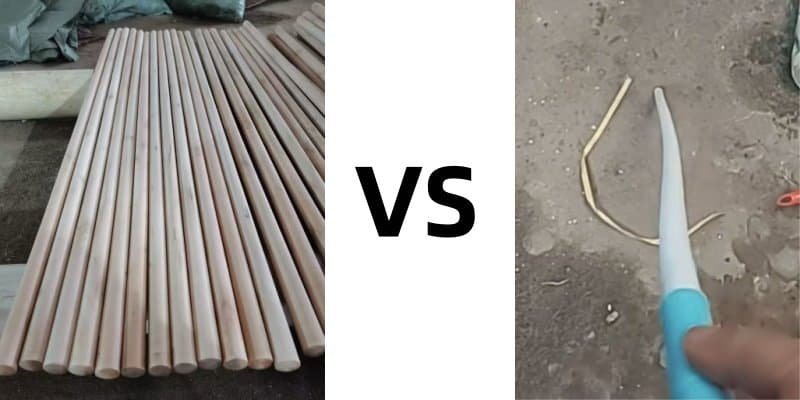
Poor drying techniques are another key trigger for bent wooden broom sticks. Bending usually does not happen during transit; it originates from flawed drying operations. Rapid drying forces wood to lose moisture too quickly and creates internal stress, which causes warping.
Drawing on our decades of production experience, qualified factories adopt these wooden broom stick factory solutions to control bending and warping:
- Sort out bent raw timber at the source. Enforce strict rules so workers cannot process bent logs into broom stick blanks, stopping this type of wooden broom sticks quality issues before production starts.
- Apply staged, slow drying for air-dried and kiln-dried broom sticks. Conduct strict moisture testing to avoid internal stress generated by fast moisture loss.
- After kiln drying, let wood rest for 7–10 days before sorting, to remove sticks that exceed bend tolerances. Many small factories skip this resting period to meet tight deadlines, resulting in later deformation and quality problems of wooden broom sticks.
Cracking – costly wooden broom sticks quality issues for bulk buyers
Cracking is one of the most costly wooden broom sticks quality issues for bulk purchasers. Three primary causes lead to cracking: low-grade raw timber with pre-existing cracks, rapid moisture loss during air drying or kiln drying, and delayed cracking triggered by temperature shifts or dry climates in destination countries after shipment.
Cracked wooden broom sticks bring procurement risks including end-customer rejection, complaints and compensation claims, which fall under serious wooden broom sticks manufacturing quality problems.
Many small manufacturers do not implement strict raw material inspection. They use low-grade, cracked timber for broom stick production without sorting defective logs. Without a complete quality control system, large volumes of finished sticks end up with cracks, a common category of quality problems of wooden broom sticks.
Poor control over air drying or kiln drying also creates cracked broom sticks. Some factories simply leave raw timber out in open air without moisture testing. Many small facilities do not own kiln drying workshops and only rely on sun drying for 10–15 days. Extended sun exposure will increase cracking risks and create wooden broom sticks quality issues.
Temperature fluctuation after export and arid destination climates can also cause delayed cracking. Wooden broom sticks are shipped via sea containers. Try to keep sea transit time under 3 months. Thermal expansion and contraction inside containers during long voyages may damage wood. After arrival, especially in hot, dry markets such as the Middle East and North Africa, some wooden broom sticks slowly crack over time, even if no damage is visible upon arrival.
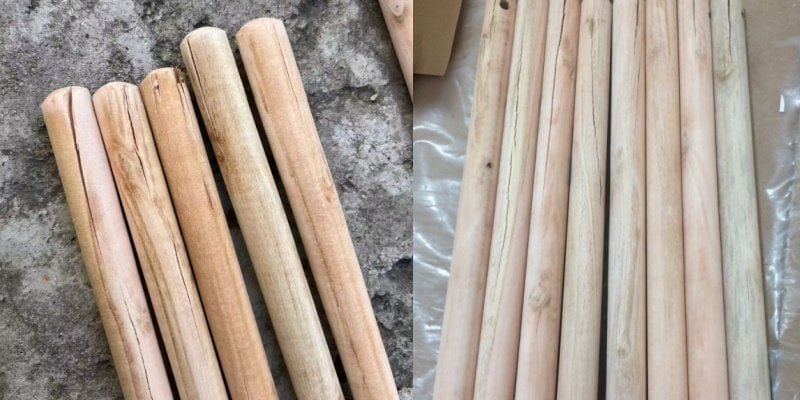
Based on our many years of production experience, these wooden broom stick factory solutions help reduce cracking risks:
- Grade raw timber properly. Remove logs with cracks, wood knots and hidden fissures. Set up two separate inspection stages during manufacturing to stop finished cracking, preventing this category of quality problems of wooden broom sticks.
- Avoid over-long air drying or kiln drying. Air drying usually lasts 10–15 days, while kiln drying takes 1–3 days. Use multi-stage drying control; excessively low moisture levels will cause cracking and more wooden broom sticks quality issues.
- For delayed cracking caused by cross-border temperature changes and dry destination climates, buyers should negotiate defect compensation clauses before placing orders. We normally cap the acceptable cracking rate at ≤3%. For full container shipments to the Middle East, strict raw material selection plus moisture control keeps cracking rates extremely low and reduces wooden broom sticks manufacturing quality problems.
Mould & mildew – high‑risk wooden broom sticks quality issues for sea shipment
Mould and mildew are high-risk wooden broom sticks quality issues for sea freight shipments. Two main triggers exist: excess moisture content before packing and humid container environments. The full chain of mould formation is: excessive moisture → high heat and humidity inside containers → mould growth during ocean transit. Mould contamination brings huge procurement risks including customs detention and cargo return, which may render the entire shipment worthless, one serious category of quality problems of wooden broom sticks.
Many small factories skip moisture testing on wooden broom sticks. To speed up production, they pack finished sticks even when moisture levels remain too high. Wet, heavy finished broom sticks create massive hidden risks for mould. After years exporting wooden broom sticks, we have witnessed competitors lose full containers due to mould caused by unchecked high moisture before packing, a typical case of wooden broom sticks manufacturing quality problems.
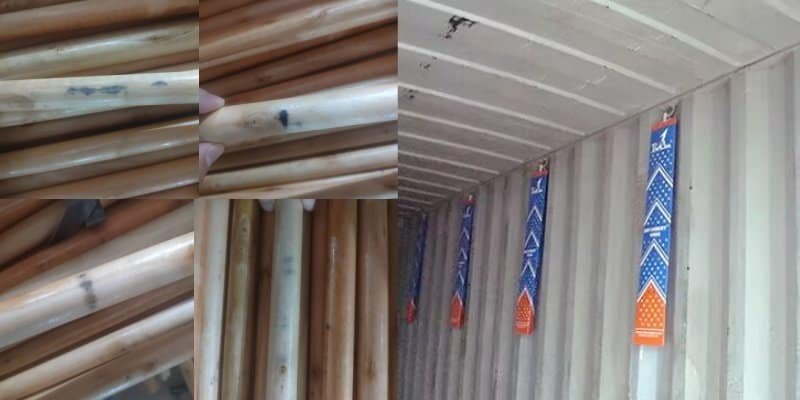
Qualified factories apply these wooden broom stick factory solutions to prevent mould:
- Timber should receive heat treatment before production. According to IPPC Official ISPM-15 Standard, heat treatment (HT) requires a core wood temperature ≥56°C held for 30 minutes, or dielectric heating at 60°C for 1 minute, to prevent mould at the source.
- Test moisture levels before production and recheck moisture after finishing, before packing. Ban packing operations during humid weather, so we can avoid wooden broom sticks quality issues caused by excess moisture.
- Inspect containers thoroughly for leaks before loading. Replace leaking containers immediately. Never load cargo during heavy rain or humid conditions. Place desiccants inside containers to reduce moisture buildup and avoid quality problems of wooden broom sticks.
Thread stripping – assembly‑related wooden broom sticks quality issues
Thread stripping is assembly-related wooden broom sticks quality issues. Two root causes are unstable thread dimensions and insufficient cutting precision. Thread stripping stops broom heads from fitting properly, raising assembly scrap rates and slowing production lines for finished product manufacturers, which counts as critical quality problems of wooden broom sticks.
Wooden broom sticks support multiple regional thread specifications: Italian threads, American UNC threads, Mexican threads, Greek threads and French threads. Even Italian threads have multiple sub-types. Mismatched or unstable thread dimensions are one major cause of this type of wooden broom sticks manufacturing quality problems.
Some factories run aging equipment without regular maintenance. Worn threading cutters create unstable thread depth and pitch tolerances, which is more than simple poor workmanship. Without sampling inspection before packing, thread stripping happens and broom heads cannot fasten tightly, creating avoidable wooden broom sticks quality issues.
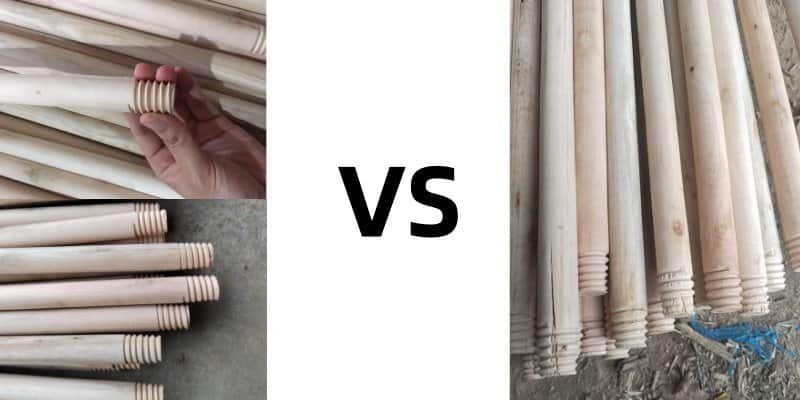
These wooden broom stick factory solutions help factories control thread stripping defects:
- Keep stock of threading cutters for common thread types and replace worn cutters promptly. We recommend clients send sample broom heads before order confirmation. We produce matching thread samples and send samples back for client approval before mass production.
- Calibrate threading moulds regularly. Run sample assembly tests for every batch before shipment, to protect buyers and minimise thread stripping and other quality problems of wooden broom sticks.
How qualified factories prevent wooden broom sticks quality issues in general
If you are searching for a new supplier, you must select a reliable wooden broom stick factory to avoid all forms of wooden broom sticks quality issues.
A qualified manufacturer must build full controls over bending, cracking, mould, thread stripping and other quality problems of wooden broom sticks. The ideal partner should also offer OEM customization.
Drawing from our long manufacturing experience, we prepared a supplier audit checklist for buyers sourcing wooden broom sticks. You can use this checklist to evaluate any wood handle supplier, including wooden broom handle manufacturers, tapered broom handle manufacturers and mop handles suppliers. We also cover key factors such as wooden broom handle lead‑time during supplier evaluation.
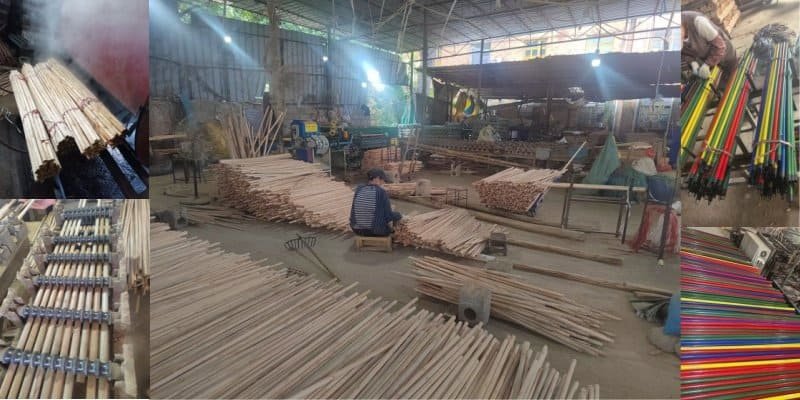
- Does the factory have stable kiln drying workshops and moisture testing equipment?
- Does the factory carry out batch sampling inspections?
- Does the factory own heat treatment equipment and valid certification?
- Does the factory provide clear compensation terms for defective goods?
- Does the factory support sample testing before bulk orders?
CTA Section
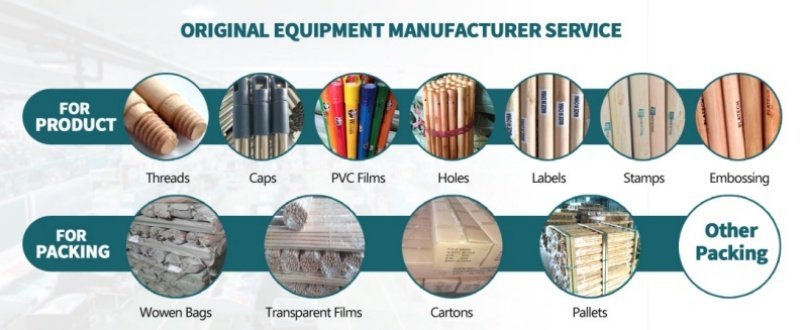
If this article interests you, please get in touch with us. Once you submit your RFQ, you will receive free sample evaluation, material specification sheets, full quality control documentation, and customized solutions tailored for your target market. Upon request, we can also support your company’s supplier audit: we can provide factory photos, quality inspection records and certification documents. Our wooden broom stick factory solutions help you avoid costly wooden broom sticks quality issues and reduce all kinds of quality problems of wooden broom sticks and wooden broom sticks manufacturing quality problems.
Submit your requirements through our website RFQ form (Recommended).
‑ Email: info@xsbroomstick.com
‑ WhatsApp: +86‑18677067945
‑ Website:www.xsbroomstick.com
Inquiry