What Wood Is Used for Tool Handles? A Complete Guide
Blog 2026-07-18
Introduction: How to Select Durable Wood for Tool Handles for Bulk Purchase
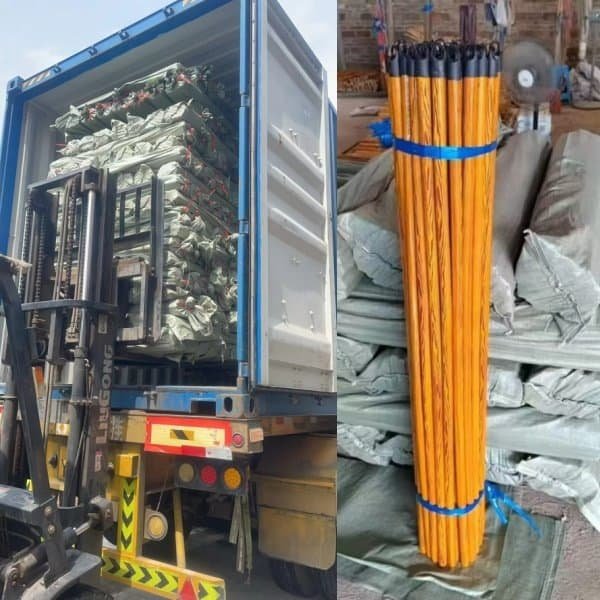
Many first-time bulk buyers of wood used for tool handles struggle to select high-quality, durable lumber for tool grip production. Overseas wholesalers often face severe operational losses due to improper selection of wood types used in tool handles, including sea freight moisture damage, port-side cracking, and full-container return and after-sales issues. For branded manufacturers, unqualified wood handle tools can lead to inconsistent grain textures, unstable hardness, and uneven finished product appearances, greatly hindering brand repurchase rates and market reputation. As specified in the ISPM 15 global mandatory standard for wooden packaging issued by the IPPC, over 98% of countries worldwide enforce ISPM 15 fumigation and quarantine requirements for wooden accessories. Uncompliant wooden tool handles face a customs detention rate as high as 37%. Qualified kiln-dried lumber for wood handles for tools must maintain a moisture content of 8%–12% to adapt to long-distance ocean transportation. Therefore, lumber compliance and packaging standards are critical for wood used for tool handles. According to the USDA wood import compliance regulations(USDA Official Wood Import Standards), unfinished logs without heat treatment are prohibited from import into the U.S. market. High-moisture wood types used in tool handles have an after-sales rate of over 40% due to mildew and cracking during sea freight. To select premium durable wood handles for tools, buyers need to evaluate six core dimensions: hardness, moisture resistance, crack resistance, machinability, international compliance, and batch stability. This guide elaborates on all key selection criteria in detail.
Comparison Chart: All Popular Wood for Tool Handles (Hardness, Texture & Price)
As a professional wood tool handle manufacturer with over 10 years of export experience, we ship approximately 264 containers of wooden tool handles annually. Based on our long-term export data, we have sorted out six mainstream types of wood used for tool handles for global wholesale markets: Hickory, Ash, Beech, Eucalyptus, Rubberwood, and Poplar. Below is a detailed introduction to the characteristics, advantages, and applicable scenarios of these wood types used in tool handles, helping you select the most suitable wood handles for tools for your business.
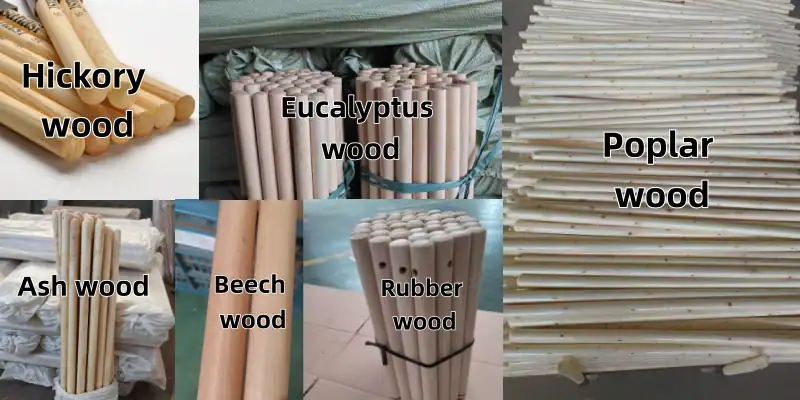
1. Hickory (High-End Tool Handles)
Hickory tool handle, Janka Hardness: 1820 lbf. Core features: Top-tier impact resistance, high density, excellent wear and crack resistance. Machinability: Moderately high hardness, requiring hard alloy cutters for turning and tapping. Moisture & storage stability: Moderate; full kiln drying is required to prevent sea freight cracking. Market positioning: Premium hardware and heavy-duty cleaning wood handle tools for European and American markets. After-sales rate: Less than 2% (ultra-low industry level). Ideal clients: High-end brand manufacturers and offline hardware chain wholesalers.
2. Ash (Mid-to-High-End Cleaning Tool Handles)
Ash tool handles, Janka Hardness: 1320 lbf. Core features: Balanced toughness, straight and uniform grain. Moisture resistance: Excellent, suitable for long-term storage in humid overseas warehouses. Machinability: Perfect performance in thread drilling, round turning, and polishing molding. Market positioning: Mid-to-high-end supermarket broom and mop sets. After-sales rate: Approximately 3%.
3. Beech (Best-Selling Universal Tool Handles)
Beech tool handles, Janka Hardness: 1300–1400 lbf. Core features: Extremely uniform grain with minimal color difference. Environmental compliance: Easily meets the EU EN717 E1 formaldehyde emission standard. Machinability: Low processing difficulty, with a high yield rate for mass rod turning production. Market positioning: The most mainstream universal wood used for tool handles for global cleaning tools and OEM bestsellers. After-sales rate: 2.5%.
4. Eucalyptus (Cost-Effective Mid-Range Handles)
Eucalyptus tool handles, Janka Hardness: 1260 lbf. Core features: Fast-growing and sustainable, straight lumber with minimal bending and balanced density. Moisture and mildew resistance: Good performance, low mildew risk after kiln drying during sea freight. Machinability: Easy for round turning, drilling, and thread cutting, with low mass production costs. Batch stability: Excellent uniform light pink-brown color, perfect for bulk unified packaging and shipment. Cost positioning: Mid-to-low grade with outstanding cost performance. Applicable scenarios: Mass affordable broom and mop rods for Middle Eastern, Southeast Asian, and South American markets. After-sales rate: 3.2%. Additional advantages: Sustainable fast-growing lumber compliant with European and American green procurement policies, with traceable forest certification documents available.
5. Rubber wood (Mid-Range Affordable Handles)
Rubber wood tool handles, Janka Hardness: 920 lbf. Core features: Better moisture and mildew resistance than most broad-leaved woods, mild and odorless. Batch stability: Uniform color, ideal for large-scale OEM customization. Machinability: Extremely easy to process, with smooth polishing and no burrs. Market positioning: Mid-range affordable cleaning and garden wood handles for tools. After-sales rate: 3.5%.
6. Poplar (Budget Entry-Level Handles)
Poplar tool handles, Janka Hardness: 540 lbf. Core features: Lightweight with ultra-low raw material costs. Drawbacks: Low hardness, prone to deformation under heavy load and denting from collision. Moisture resistance: Poor, easy to mildew in high-humidity storage environments. Market positioning: Low-cost supermarket disposable brooms and simple cleaning rods. After-sales rate: Over 7%.
I have prepared a table for your reference:
| Wood Type | Janka Hardness (lbf) | Core Features | Moisture & Storage Stability | Machinability | Market Position | After-sales Rate | Target Clients |
|---|---|---|---|---|---|---|---|
| Hickory | 1820 | Top impact resistance, high density, crack & wear resistant | Medium. Full drying required to avoid cracking during sea transportation | Moderately difficult, hard cutting tools required for turning and threading | Premium hardware & heavy-duty cleaning tool handles | < 2% | High-end brands, national hardware chain wholesalers |
| Ash | 1320 | Balanced toughness, straight grain | Excellent, suitable for long-term storage in humid warehouses | Perfect for threading, rounding and polishing | Mid-to-high end broom & mop sets for supermarkets | ~ 3% | Mid-range cleaning tool brands, importers |
| Beech | 1300–1400 | Extremely uniform grain, minimal color difference | Good, stable performance after drying | Easy to process, high yield for mass production | Global mainstream handles, bestseller for OEM & private label | ~ 2.5% | OEM factories, large cross-border wholesalers |
| Eucalyptus (Red Grandis) | 1260 | Sustainable fast-growing wood, straight timber, even density | Good, low mildew risk after drying for ocean shipping | Easy for rounding, drilling and threading, low mass production cost | Cost-effective bulk export wood for mid-low market | ~ 3.2% | Wholesalers & trading companies for Middle East, Southeast Asia & South America |
| Rubberwood | 920 | Great mildew resistance, mild natural odor | Excellent anti-mold performance | Very easy to process, smooth surface after polishing | Mid-range cleaning & garden tool handles | ~ 3.5% | General market wholesalers, OEM manufacturers |
| Poplar | 540 | Light weight, ultra-low raw material cost | Poor, prone to mildew & deformation in humid environment | Easy to cut, easy to dent under heavy load | Low-cost disposable brooms & simple cleaning tools | 7%+ | Low-price bulk wholesalers, promotional orders |
Recommended Wood for Tool Handles for Cleaning Tools (Broom & Mop)
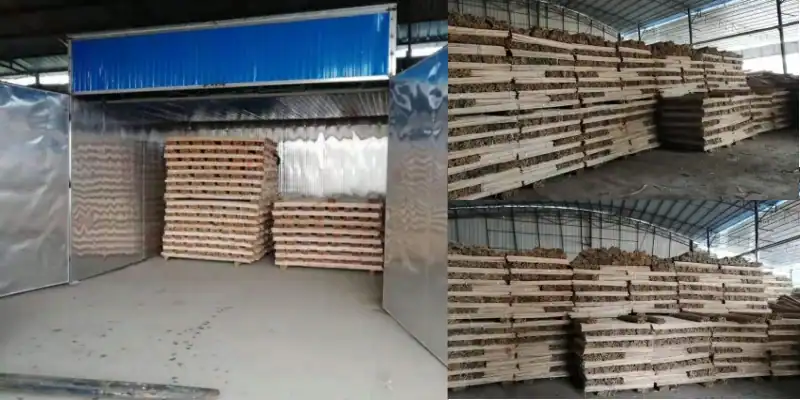
Broom and mop wood handle tools do not require ultra-high hardness, but must feature excellent moisture resistance, deformation resistance, and lightweight properties. Cleaning tools are often stored in humid warehouses, outdoor environments, and damp supermarket spaces, making mildew and cracking common quality issues. Eucalyptus and Poplar are the most suitable wood types used in tool handles for broom and mop production, thanks to their lightweight texture and competitive pricing. For European market access, the EU EN717-1 Wood Formaldehyde Environmental Standard stipulates that the formaldehyde emission of wooden cleaning wood handles for tools must not exceed 0.124 mg/m³ (E1 grade). In addition, all cleaning tool wooden handles must be naturally sun-dried or artificially kiln-dried for long-term safe storage. The EN13986 Wood Moisture and Deformation Resistance Standard verifies that lumber with artificial kiln drying and moisture content shaping can reduce cracking and mildew failure rates by over 68% during 3–12 months of long-term warehousing. For U.S. market entry, the U.S. CARB P2 North American Wood Product Compliance Standard ensures compliant wood used for tool handles can be legally sold in U.S. supermarkets, Amazon stores, and offline wholesale markets without removal risks. Professional broom handle thread processing and standardized drying procedures are essential for qualifying cross-border cleaning tool handles.
Supply Chain Advantage of Stable Wood for Tool Handles for Wholesalers
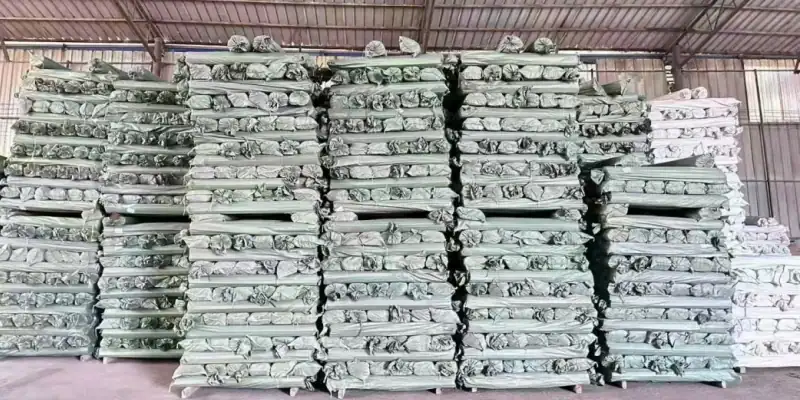
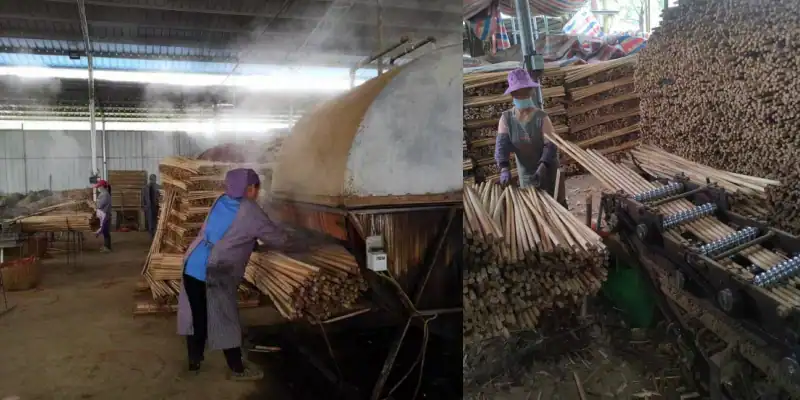
According to the latest FAO ISPM 39 International Wood Trade Stability Standard released by the Food and Agriculture Organization of the United Nations, controlling the batch moisture content deviation of wooden products within 2% can meet global low after-sales standards, and standardized pretreatment processes can keep the return rate of cross-border wood used for tool handles below 1.5%. As stated in the North American Wood Industry Association Quality Control Report, wood types used in tool handles processed with unified drying, polishing, and threading technologies can boost terminal repurchase rates by 32%. As a reliable wooden tool handles suppliers, wooden shovel handle manufacturer and wood mop handle manufacturer, and professional broom stick manufacturers based in Guigang, Guangxi, we have over 10 years of dedicated experience in producing and exporting broom rods and various wooden tool handles. We provide global wholesalers with highly stable wood handles for tools and exclusive supply chain advantages:
1. Batch consistency: Uniform grain, hardness, and moisture content for every batch ofwood handle tools;
2. Professional moisture-proof pretreatment: Effectively solves mildew and cracking problems during overseas storage and transportation;
3. Complete compliance documents: Full set of customs declaration, quarantine, and environmental certification documents to ensure hassle-free customs clearance;
4. Customization service: Customizable length, thread specification, and polishing process for brand customization needs;
5. Stable supply capacity: Sufficient inventory and strong delivery capability for large orders.

Feel free to contact us for accurate quotations and professional technical consultation for broom sticks and all types of wooden tool handles.
Inquiry