What is the best wood for shovel handles?
Blog 2026-08-07
Introduction: Finding the best wood for shovel handles for your import & distribution business
Finding the best wood for shovel handles is critical for your import and distribution business. Our factory has manufactured wooden shovel handle products for more than a decade, with over ten‑year experience exporting durable wood shovel handle suppliers grade goods to global markets. We have witnessed countless buyers run into costly pitfalls. Many importers only reference online Janka hardness ratings before placing orders, only to discover issues afterward: insufficient supply capacity, landed costs blowing past budgets, mass cracking upon arrival in the Middle East, customs detentions in Europe due to missing certificate of origin, and high volumes of end‑customer returns and complaints.
The USDA Forest Products Laboratory, Wood Handbook (FPL‑GTR‑113) notes significant performance variance across wood species. Hardness alone cannot predict real‑world field performance for hand‑tool handles. Selecting proper wooden shovel handle material is therefore both a performance and commercial decision. This guide helps distributors, finished‑goods tool manufacturers and traders make data‑backed purchasing decisions. You will learn to pick suitable lumber for your product lines, lower return risks, match requirements for European, North American and Middle‑East markets, assess supplier capacity and cut trial‑and‑error costs. We also touch on related manufacturing capabilities from wooden tool handle manufacturers, cnc machining wood handle factories, alongside supporting accessories such as broom handle end cap, stick broom items, and insights for those searching broom handle manufacturers near me to evaluate overall factory strength.
What factors define the best wood for shovel handles in real wholesale business
From decades of exporting shovel handles, one case stands out. An Iranian customer inquired about eucalyptus wood shovel handle alternatives but insisted on poplar for his best wood for shovel handles selection, purely driven by lower unit price. We warned him poplar performs poorly in Iran’s extremely dry climate and carries high cracking risk for wooden shovel handle material. He proceeded with poplar anyway. When goods arrived in Iran, 74% of handles showed visible cracking. Our team still had to assist him with heavy after‑sales work.
This real‑world case proves that some lumber scores high on Janka hardness yet features large shrinkage rates. Severe temperature shifts during ocean shipping trigger cracking, making them poor choices for a durable wood shovel handle suppliers program.
Beyond hardness and price, what criteria should you use to source the best wood for shovel handles for wholesale projects? Drawing on our factory’s long‑term export data, we built a three‑part evaluation checklist covering physical performance, B2B commercial procurement and compliance metrics:
- Physical performance: Janka hardness, impact resistance, shrinkage‑cracking risk and climate adaptability.
- B2B commercial procurement: Annual supply capacity, total landed FOB cost, local market consumer acceptance.
- Compliance: IPPC ISPM‑15 marking. You must understand when IPPC markings are mandatory, and which regions enforce strict customs inspections (EU, North America, Australia). Non‑compliant solid wood cargo leads to container detention, rejection or costly port demurrage fees. The official IPPC ISPM‑15 Official Standard clarifies that non‑compliant solid‑wood shipments risk being held, refused or returned at destination ports.
Buyers must make trade‑offs. A wood species may deliver outstanding mechanical properties yet have limited annual output, making it unsuitable for extra‑large bulk orders. Great performance does not automatically equal a good fit for your business when you source eucalyptus wood shovel handle or other variants of the best wood for shovel handles.
Compare mainstream lumber: which is the best wood for shovel handles for different product tiers
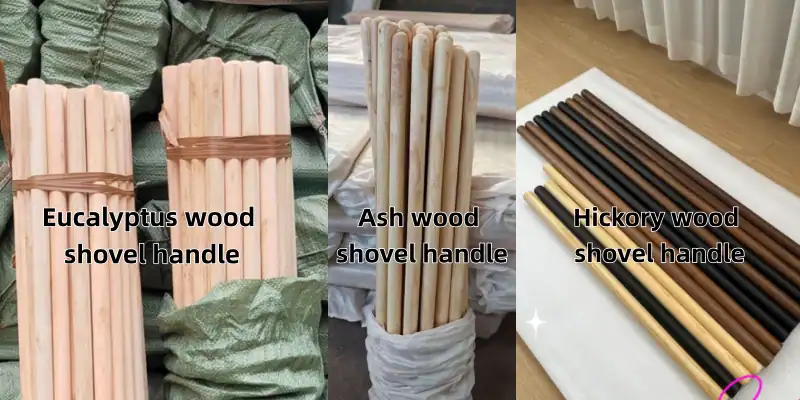
Based on buyer requirements and our export statistics, three primary wood species dominate production for wooden shovel handle material: eucalyptus, ash and hickory. Below we compare them using our procurement evaluation checklist, kindly please check:
|
Comparison Object
Comparison Dimension
|
Eucalyptus | Ash (Manchurian Ash) | Hickory |
|---|---|---|---|
| Janka Hardness | ~1,100–1,300 lbf (mid‑range) | ~1,300–1,450 lbf (high) | ~1,820 lbf (very high) |
| Crack Resistance | Good for moderate climates; moderate risk in extremely dry/hot regions | Excellent; stable dimensional performance, low shrinkage rate | Very good; natural resilience reduces splitting under impact |
| Price Tier | Budget / mid‑range | Mid‑high (premium) | High (premium‑plus) |
| Suitable Product Lines | Mass‑market hardware stores, economy‑grade shovel lines | Mid‑to‑premium tool collections, professional‑grade tools | Professional / heavy‑duty tool lines, premium branding |
| Target Markets | Southeast Asia, Middle East, European budget chains | Europe, North America mid‑premium, Australia | North America premium, professional construction brands |
| Shortcomings | Lower hardness; not ideal for extreme heavy‑duty use | Higher cost than eucalyptus; moderate supply volume | Highest cost; limited bulk supply; longer lead times |
| Suggested MOQ | 5,000 pcs (flexible for trial orders) | 3,000 pcs (premium‑grade minimum) | 1,000 pcs (limited batch availability) |
Practical business takeaways from this comparison for picking the best wood for shovel handles:
- Entry‑level high‑volume lines: Choose eucalyptus wood shovel handle. Benefits include competitive pricing, massive raw‑material stock and fast delivery for mass production. It delivers top‑tier cost‑performance. Drawbacks: higher internal stress and shrinkage. Moderate cracking risk exists under extreme dry or hot environments, demanding strict process control. Profit margins are relatively slim. You should anticipate a small percentage of defective units. Fit for Southeast Asia, mass‑market Middle‑East trade and European budget hardware retail chains.
- Mid‑tier hardware store product lines: Choose ash. Advantages include excellent dimensional stability and low shrinkage, minimizing cracking risk with better profit returns. Drawback: higher material cost than eucalyptus and moderate supply capacity. Ideal for mid‑high‑end European, North‑American and Australian markets.
- Premium professional‑grade lines: Choose hickory. Outstanding natural toughness resists splitting under heavy impact and delivers maximum profit potential. Drawbacks: highest material cost, constrained bulk‑supply resources and extended lead times for large orders. Target premium North‑American buyers and professional construction‑tool brands.
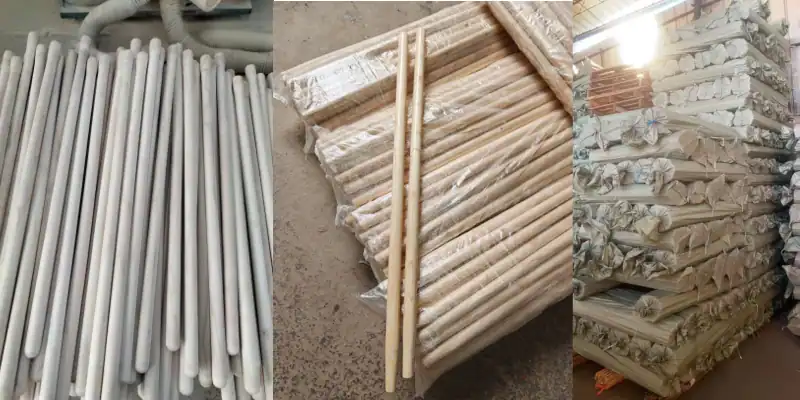
If you work with durable wood shovel handle suppliers, always align lumber grade with your market positioning instead of blindly chasing the hardest wood when you hunt for your best wood for shovel handles.
OEM & custom options from professional shovel handle manufacturer
Once you lock in your wooden shovel handle material, what customizations are available? Can large‑volume shipments be guaranteed? As an experienced manufacturer, we answer these key questions. A professional factory should support custom non‑standard lengths, specialty thread specifications (Italian, American, Greek, French threads), surface finishes (natural, varnished, PVC coated), custom export packaging and printed IPPC markings, alongside stable mass‑production lead times.
Our standard custom workflow: Material confirmation → specification review → sample approval → mass manufacturing → pre‑shipment quality inspection → export packaging → container loading.
Our monthly output reaches 100 000 shovel handles. We produce eucalyptus wood shovel handle, ash and hickory variants for your best wood for shovel handles projects. Certain custom specifications will require extended lead‑times. We strongly recommend sample confirmation before launching bulk orders when cooperating with durable wood shovel handle suppliers.
Conclusion & Call‑to‑action: Get your quote for the best wood for shovel handles
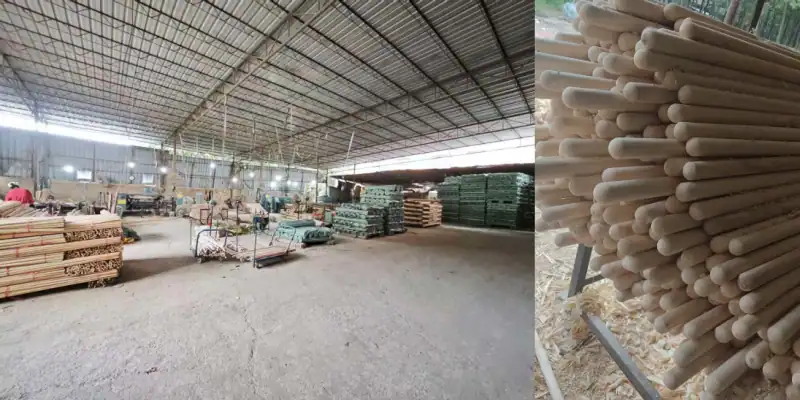
By now you understand how to select the best wood for shovel handles. Drawing on our experience serving hundreds of global wholesale buyers, matching lumber grades to your local market reduces product‑return rates significantly. There is no universal “one‑size‑fits‑all” wooden shovel handle material. Your final choice depends on target market, budget and product‑line positioning.
If you want consultation on eucalyptus wood shovel handle or other options for the best wood for shovel handles, submit your RFQ. Share your project parameters and OEM requirements. Our factory provides direct material‑selection recommendations and wholesale quotations from our position as trusted durable wood shovel handle suppliers.
Inquiry